
What to Expect When You Hire a Documentary Wedding Photographer
Most articles about documentary wedding photography describe the style — what it is, how it differs from traditional photography, why candid moments matter. Those are useful conversations, but there's another question couples ask that doesn't get answered nearly as often: What is it actually like to work with you?
That question deserves a real answer, because hiring a documentary wedding photographer isn't just a style decision. It's a relationship that begins the moment you book, and it shapes how you experience your wedding day from start to finish. Here's what that looks like.
Between Booking and the Wedding Day
There's often a significant stretch of time between when you book your photographer and when you actually see them again on your wedding day. For most couples, that gap is months — sometimes well over a year.
During that time, I stay in touch periodically with informational emails that touch on topics relevant to where you are in the planning process. Things like how to think about timing for family formal photos, why good light matters and how to plan around it, or what to do if the weather doesn't cooperate. The goal isn't to fill your inbox — it's to be a useful resource throughout the planning process so that by the time your wedding day arrives, you've had access to a photographer's perspective on the decisions that actually affect your photos.
This also means I'm not a stranger who shows up with a camera on the most important day of your life. We've been in conversation. You know I'm paying attention.
The Pre-Wedding Meeting
About one to two weeks before your wedding, we sit down together — in person or over Zoom — and walk through your entire wedding day from beginning to end.
I ask questions. I listen. I offer input when you want it. We talk through the timeline, the logistics, the details that are still moving around. By the time we're done, I have a clear picture of how your day is structured and what matters most to you. And you have a clearer sense of what to expect from me.
This meeting matters for both of us. For you, it's a chance to think through the day with someone who has seen a lot of wedding days and can flag things worth considering before it's too late to adjust them. For me, it's how I prepare to do my best work. I'm not walking into your wedding improvising from scratch; I'm walking in with context and intention.
There's something else this meeting does that's easy to overlook: it reacquaints us. By the time your wedding morning arrives, we're not trying to break the ice again. You already know me. I already know you. That matters more than most couples expect.
How I Arrive on Your Wedding Day
One thing I learned as a photojournalist was to always show up early. Always. I carry that with me to every wedding I photograph and show up early, sometimes up to an hour before I'm scheduled to be there. And when I walk through the door, I don't have a camera in my hand.
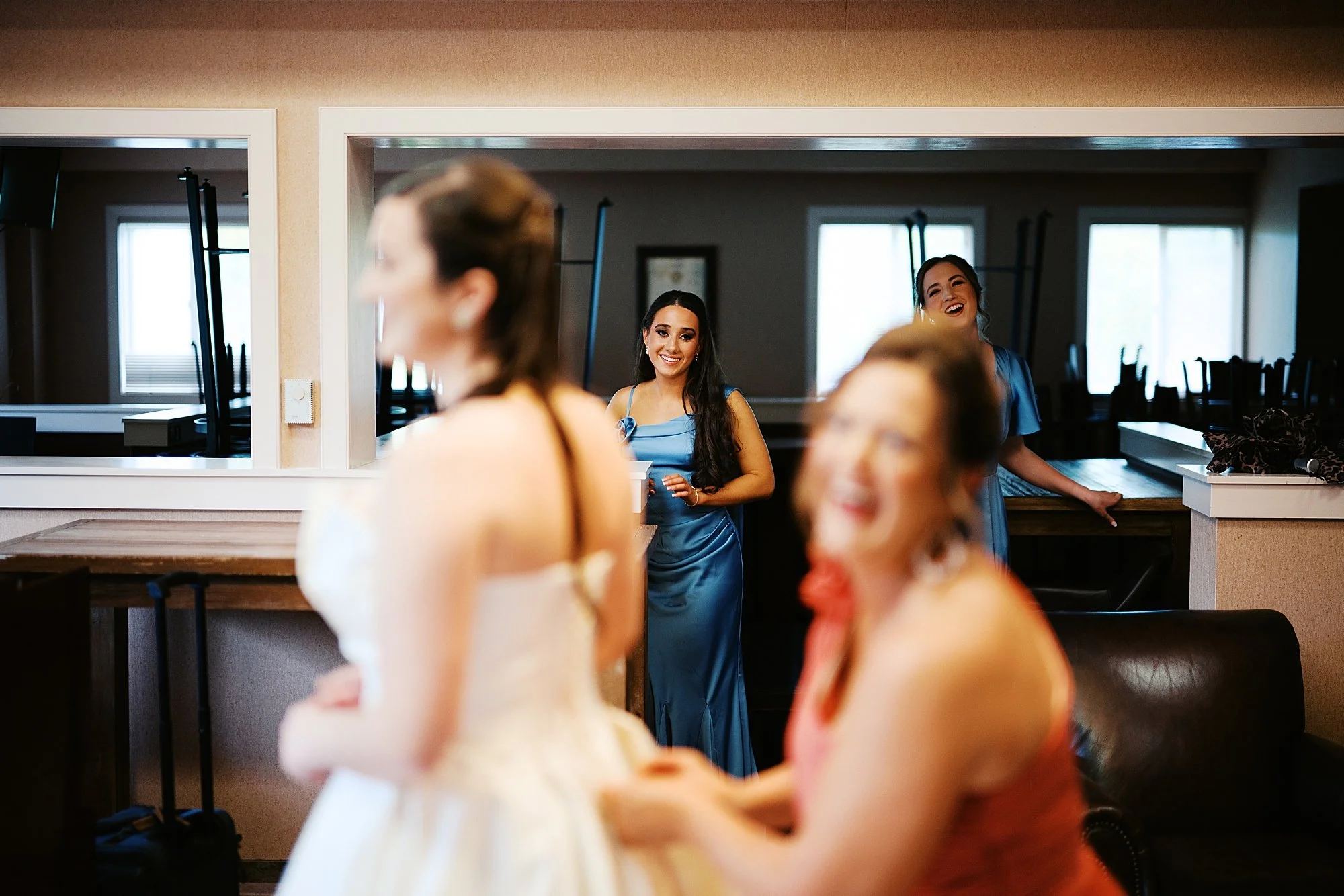
Before I photograph anything, I introduce myself to anyone I haven't already met. I have conversations. I find out who people are. I pay attention to the dynamics in the room, who's close with whom, who the quiet ones are, what the energy is like. I'm just another person in the space for a while.
This is deliberate. People behave differently when there's a camera pointed at them — most of us tighten up, become aware of ourselves, start performing in small ways we don't even notice. My goal, before I ever raise a camera, is to become comfortable enough in the room that people stop registering my presence. Not invisible exactly, but unremarkable. Something like a piece of furniture.
Once that starts to happen — once the conversations are flowing and people have relaxed into the morning — I'll pick up the camera and start working. And when I do, I start on the periphery. I work my way in rather than pushing straight to the center of things. I'm not loud. I'm not directing. I'm watching.
The getting-ready period, in particular, is where a lot of the most honest moments of a wedding day happen — the quiet ones, the chaotic ones, the ones that say something true about who these people are to each other. Being patient enough to let those moments develop, rather than manufacturing something to photograph, is where documentary coverage earns its name and its place.
What Documentary Coverage Actually Feels Like
The most common thing couples tell me they expected — and didn't experience — was feeling constantly aware of the camera.
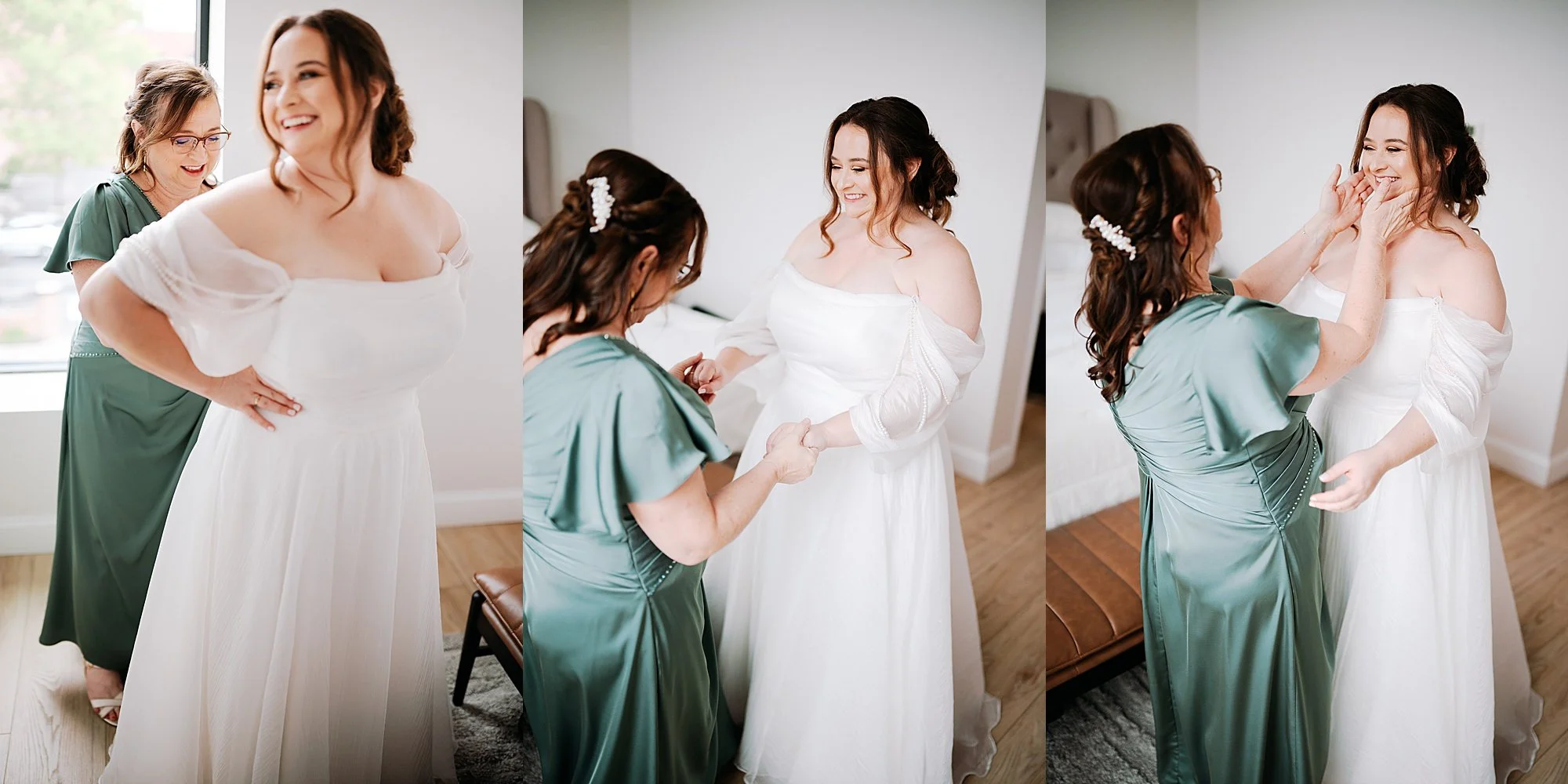
Documentary coverage, done well, doesn't feel like being photographed. It feels like your wedding day. You're talking with your grandmother, but you probably don't notice I've already gotten frames of the way she's watching you. You're laughing with your wedding party, and I'm already positioned for what's about to happen. You're standing with your partner for a quiet moment before the ceremony, and I'm there — but you've forgotten I'm there.
That's the goal. Not to disappear entirely, but to make my presence unremarkable enough that the day can unfold naturally around it.
What this also means is that you won't spend your wedding day managing me. You won't be pulled aside constantly, repositioned, asked to redo a laugh or hold a look. Your job on your wedding day is simply to be there — to be with the people you love, to feel what you feel, to let the day be what it is. My job is to pay close attention and bear witness to all of it.
What About Portraits?
This is the question I hear most often from couples considering a documentary approach, and it deserves a straight answer: documentary does not mean no portraits.
What it means is portraits approached with a different priority. I absolutely guide my couples during portrait time — the goal is images that are beautiful and still feel like you, not stiff or manufactured. That requires some direction, and I'll never pretend otherwise.
For family formals, I make a specific promise: I will be done in 15 to 20 minutes, maximum. Not because these photos don’t matter — they will likely become highly treasured in the future — but because the point of your wedding day is not to spend it with me. The faster we move through the formal structure, the sooner you're back in the room with the people you love.
What Couples Tell Me Afterward
When couples get their galleries back and reach out, two things come up more consistently than anything else.
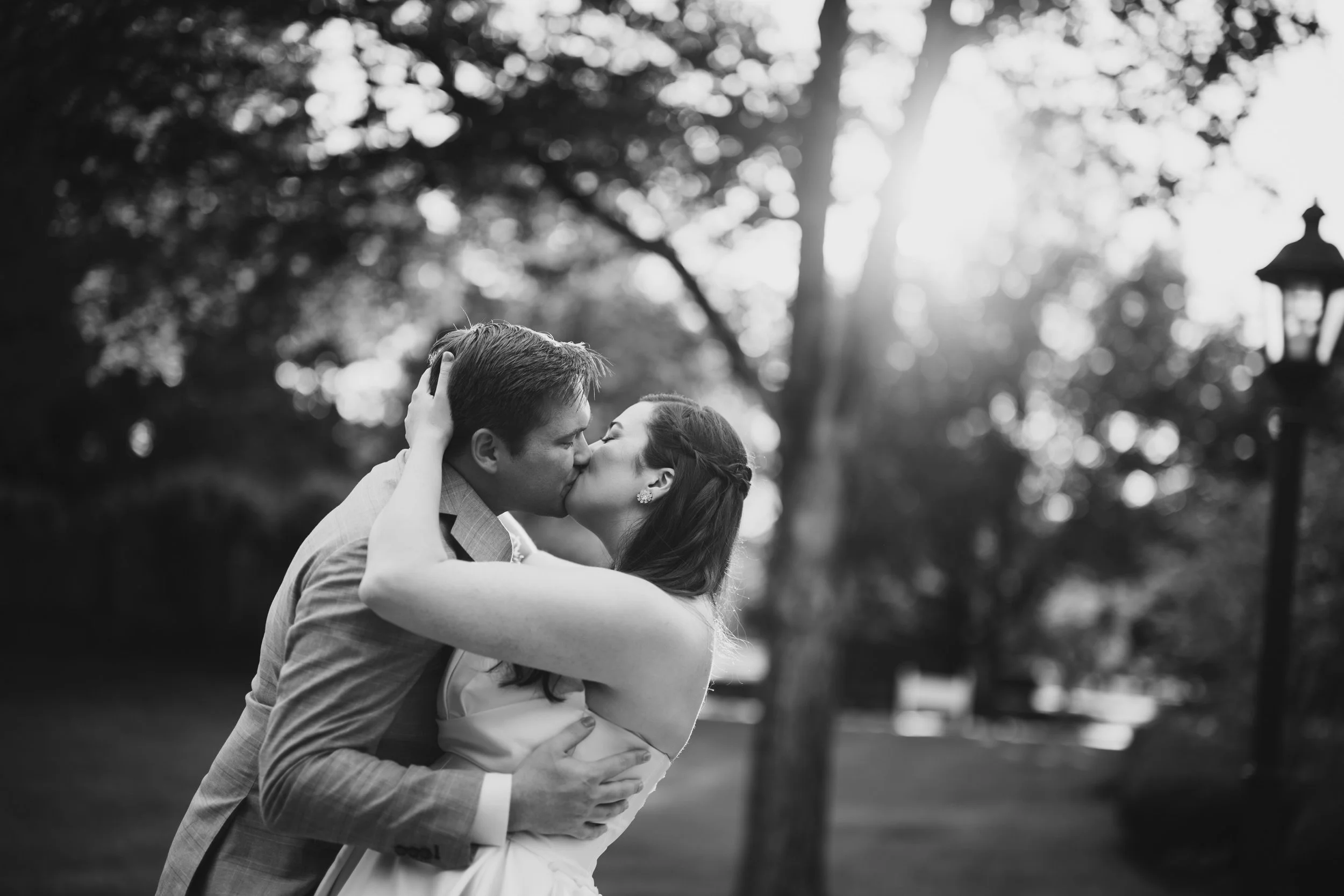
The first is that I captured moments they either didn't know had happened or had completely forgotten. A look from across the room. Something that happened in a corner while everyone else's attention was elsewhere. A split-second between two people that was over before anyone could have staged it. These are the images that tend to stop couples when they're going through their gallery — not the ones they expected, but the ones they didn't know to expect.
The second thing — and this one matters to me deeply — is that couples tell me I was a calming presence throughout the day, no matter what happened. Weddings are high-emotion, high-stakes events. Things shift. Schedules slip. Unexpected moments arrive unannounced. My job is never to add to that stress. My job is to be the calm in whatever storm shows up, and to keep doing what I came to do — pay attention.

Frequently Asked Questions
How much direction will I receive from a documentary wedding photographer?
Minimal, outside of portrait time. During getting ready, the ceremony, and the reception, my role is to observe and document rather than direct. For couple portraits and family formals, I do offer guidance — the goal is images that feel like you, not images that feel staged, but some direction helps get there. Outside of those structured moments, your day is yours to experience.
Do I need to do anything to prepare for working with a documentary photographer?
The most useful thing you can do is trust the process. A pre-wedding meeting will cover the practical details — timeline, logistics, priorities. On the day itself, the only thing that's asked of you is to be present. Let the day happen. The less you're thinking about the camera, the better your photos will be. It also helps to remind your family there's no need to smile at the camera whenever they see it.
How early does a documentary wedding photographer typically arrive?
I arrive early enough to settle in, meet people I haven't already met, and get comfortable in the environment before I start shooting. This is part of the approach, not an afterthought — arriving early helps everyone get more comfortable so they're more natural looking in photos.
What if something goes wrong on my wedding day?
Something almost always does — a schedule that slips, weather that shifts, a vendor who's running late. My job isn't to solve those problems, but it's also not to amplify them. I've been through enough wedding days to stay calm when the unexpected arrives. Whatever happens, just remember that at the end of the day, the only thing that really matters is marrying your partner.
Ready to Talk About Your Wedding Day?
The couples who work best with a documentary photographer are the ones who are ready to let the day be what it is — who trust that real moments are worth more than perfect setups, and who want a photographer whose presence they'll barely notice but whose work they'll return to for the rest of their lives. Oftentimes, my couples describe themselves as being awkward in front of the camera or they say they don't like being the center of attention.
If that sounds right to you, I'd love to hear about your wedding.